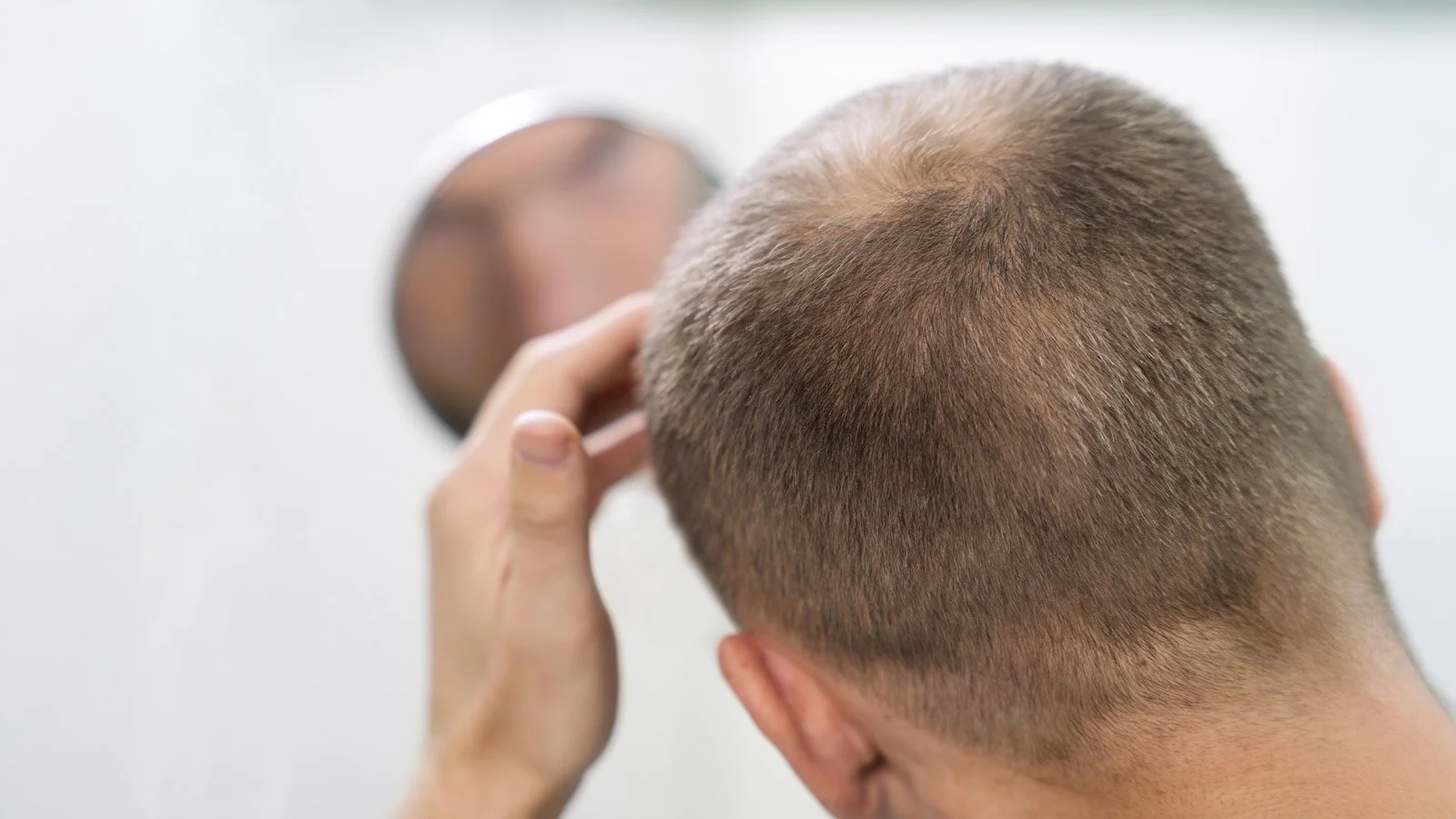

The journey of managing hair loss often follows a familiar pattern: conventional interventions accumulate without delivering sustained outcomes. Specialist shampoos accumulate on shelves while hairlines continue receding regardless of compliance.
Conventional approaches fail because they cannot restore cellular function once fundamental capacity declines.
Why Medications and Topical Treatments Fail
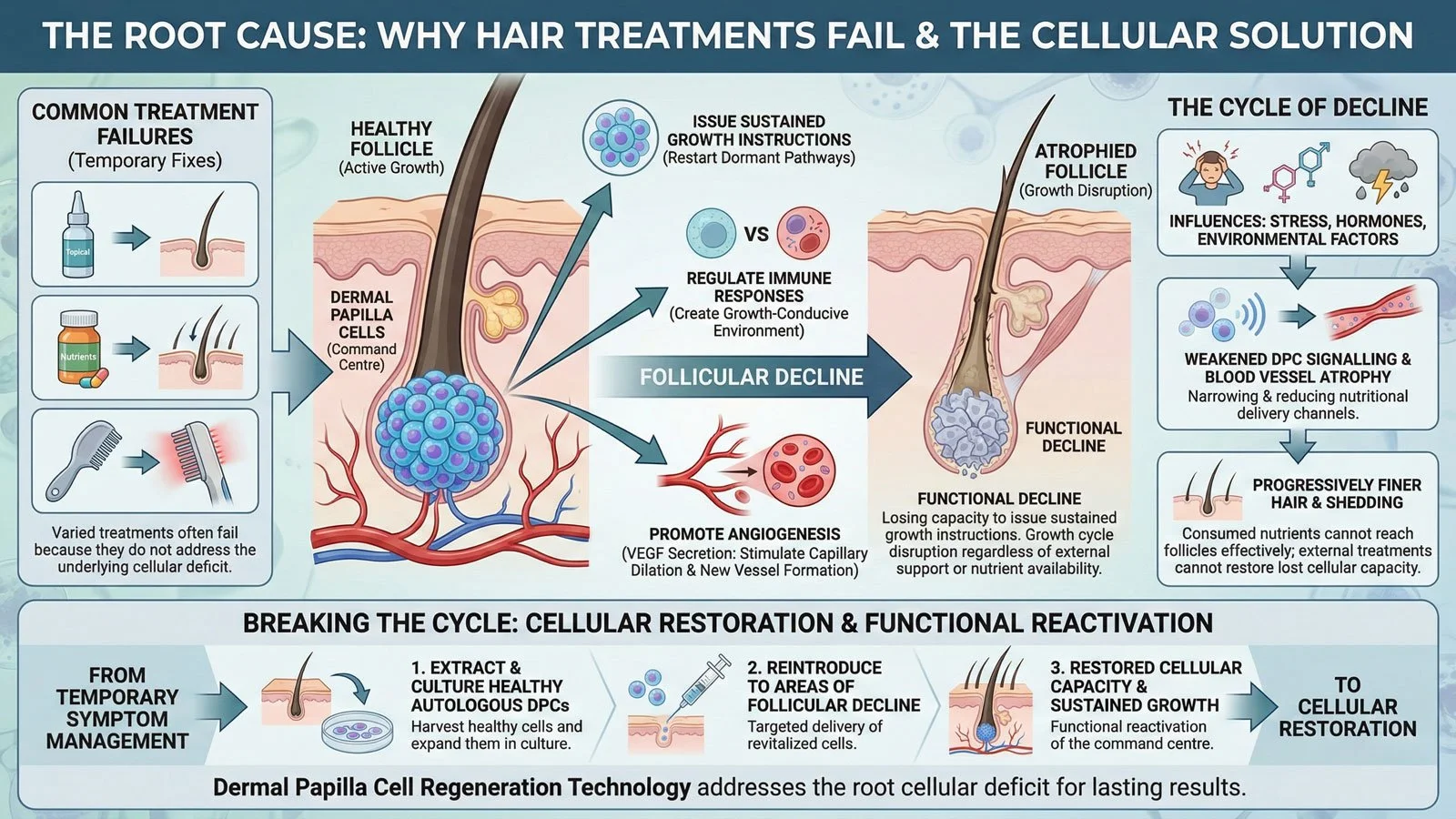
Finasteride suppresses dihydrotestosterone but causes rapid hormone level rebound when discontinued. Minoxidil extends growth phases and dilates blood vessels, but effects reverse when treatment stops.
Topical care approaches primarily affect the scalp surface and prove insufficient for regeneration. These interventions represent symptom control rather than restoration.
Why Surgery, Injections and Nutrition Fall Short
Surgical Hair Transplantation: Provides visual coverage but cannot increase total follicle numbers. Results depend on available donor follicles and surgical skill.
Injectable Therapies: Include exosomes, microneedling, and platelet-rich plasma. Growth signals prove difficult to sustain.
Nutritional Supplementation: Follicles require protein (builds hair shaft), iron (oxygen delivery), vitamins, and zinc. Critical issue: follicles cannot utilise nutrients if function is declining. Adding nutrition resembles fueling an engine too damaged to start.
The Root Cause: Dermal Papilla Cell Decline
Dermal papilla cells perform essential functions including activating regeneration through growth signal secretion, regulating immune responses to create favourable microenvironments, and promoting angiogenesis through vascular endothelial growth factor.
When functional decline occurs, blood vessels atrophy, narrowing and reducing nutritional delivery channels.
The Solution: Cellular Regeneration Technology
Dermal papilla cell regeneration technology extracts and cultures healthy autologous cells, reintroducing them to areas of follicular decline. This approach activates follicular vitality by restarting growth cycles, rebuilds scalp microenvironments, and stimulates vascular expansion.
This content is provided for educational purposes and general information. Individual treatment outcomes may vary, and all medical decisions should be made in consultation with qualified healthcare professionals.